
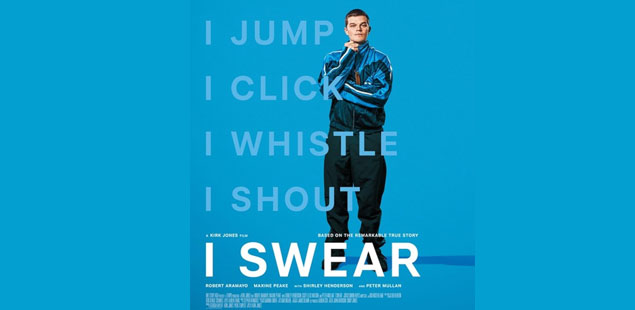
I had no idea who John Davidson was until this past February, when an incident was reported at the 2026 EE BAFTA Film Awards. Many of you might have read that in the news, but this film really highlighted his Tourette’s syndrome, a condition that not many people know about. The film begins with John receiving an MBE from the Queen and his apprehension about attending the ceremony, for obvious reasons.
“I don’t think Tourette’s is the problem. People not knowing about Tourette’s is the problem.”.– That line from this film is totally on point. Even now, I think a lot of folks still don’t know much about the condition that Davidson has been dealing with since he was 12.
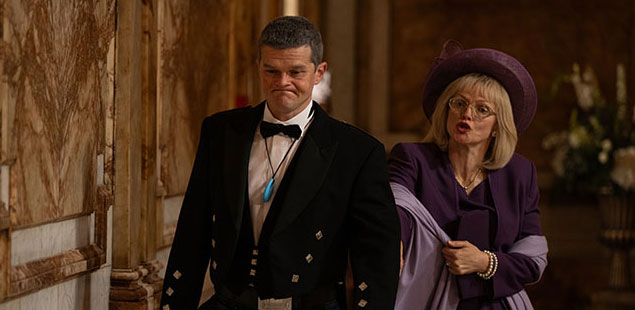
Written and directed by British filmmaker Kirk Jones, Robert Aramayo plays John Davidson, a role for which he won a BAFTA for his astounding performance. Teenage John, portrayed by Scott Ellis Watson, grew up in a working-class family in Galashiels, Scotland, and dreamed of becoming a football player. Unfortunately, his aspirations were crushed when he began to suffer from tics and uncontrollable coprolalia, which made him utter inappropriate words and offensive comments. The timing couldn’t have been worse, as this condition developed just when a scout was visiting Galashiels Academy.
John ends up getting his hand whipped with a belt by the headteacher as punishment, who thinks John was being belligerent and disrespectful. He ends up being kicked out of school, and all this friction puts a strain on his parents’ marriage. His dad (Steven Cree) suddenly left the family, leaving his mom, Heather (Shirley Henderson), to take care of John and his two siblings all on her own.

Fast forward to the mid-90s, and 25-year-old John now lives with his mom and starts taking medications. Aramayo embodies the role so well, showing the physical and mental dedication needed to authentically represent this condition. It’s more than just an impersonation; he adds a layer of vulnerability, grit, and a subtle strength to the character. Besides dealing with muscle spasms and coprolalia, John does quirky things like kissing a light pole on the street, which he later says is part of his OCD (obsessive-compulsive disorder). Jones’ script humanizes John and sheds light on the emotional pain that people with this condition go through. They often feel isolated, unable to socialize or engage in public activities, especially in quiet spots like the library.
The film captures some lighthearted moments, like when people get startled by his sudden outbursts at the market, but it also dives into the darker aspects. John gets beaten within an inch of his life with a crowbar, leaving him hospitalized, a harsh reality he faces because the world just doesn’t get his condition. Everything changes when he meets Dottie (Maxine Peake), a caring mother of his friend Murray (Francesco Piacentini-Smith), who used to be a mental health nurse.
For the first time, John can truly be himself and connect with people who understand his struggles. He even lands a job at a local community center. Plus, he finds another kindhearted ally in Tommy Trotter (Peter Mullan), who motivates him to raise public awareness about Tourette’s syndrome.
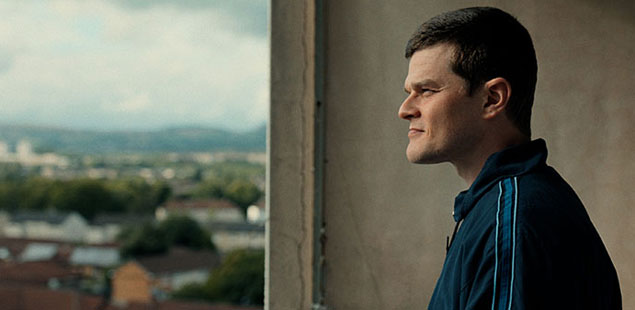
Biopics are a well-loved genre, and there are plenty of them around, but I Swear really stands out because of its unembellished and authentic depiction of a neurological condition. Staying true to the working-class community it represents, its straightforward style feels refreshing, sincere, and deeply moving. The bond between John and Dottie is charming without being overly melodramatic.
Jones’ direction skillfully mixes dark humor with raw emotional depth in an honest way, showcasing outstanding performances from the cast. Both Watson as the young John and Aramayo shine, and it’s not often you see such a smooth transition when two actors take on the same character. I love how the movie also highlights the community in the Scottish Borders area. The scenery is quite beautiful, shot by DP James Blann on location in the West of Scotland.

I Swear does many things right, but what’s remarkable is how John’s journey to becoming a campaigner feels organic, driven by his desire to assist others like him. The way he connects with another person who has Tourette’s syndrome is done beautifully; it’s both humorous and deeply touching. It’s smart of Jones to concentrate on the narrative from his childhood to the crucial period of his Tourette advocacy.
The moments where he talks to other Tourette sufferers and their parents reveal his profound empathy. Those interactions are educational without coming off as a lecture. The ending presents an uplifting scene where John finds the confidence to do something he’s never done before: strike up a conversation with a stranger.
I Swear is a brilliant example of inspirational storytelling—no cheesy melodrama, no manipulative music, and no over-the-top emotions. It’s definitely one of the best films of the year so far.

 FLIXCHATTER FILM BLOG
I’ve heard good things about this film from Mark Kermode several months ago. It’s a shame it got overshadowed by what happened at the BAFTAs.
Interesting reviews as always. I have never heard of the movie “I Swear” before but your positive review has given me a strong reason to check it out. I do appreciate movies which capture mental disabilities. I feel that Cinema is a powerful art form that can be used to effectively raise awareness for disabilities in society. The concept for “I Swear” brings to mind classic disability films that I have seen such as “Rain Man”. I do like the fact that there is no cheesy melodrama or manipulative music in this movie. It seems to be an authentic representation of Tourette’s Syndrome. So, for these reasons, I will be sure to check out “I Swear” once it hits streaming.
Here’s a list of my favourite disability films of all-time: