

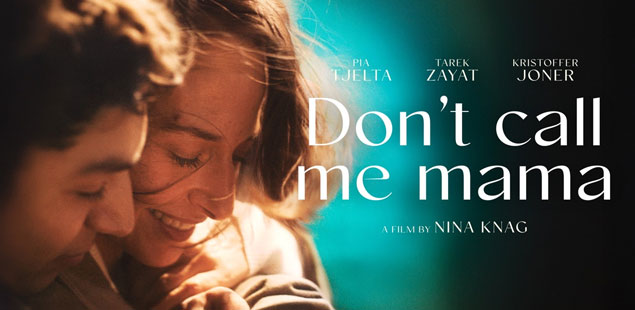
One of the main reasons I enjoy film festivals is that they frequently expose me to fresh talent in cinema. Last Thursday, I got to know Norwegian writer/director Nina Knag, whose gripping, atmospheric, and subversive debut drama will both excite and frustrate you in the best way. The phrase ‘Don’t Call Me Mama’ is never actually uttered, but it’s suggested, and you can almost sense the protagonist saying it under her breath in a crucial moment.
Eva (Pia Tjelte) is a well-liked high school teacher and the wife of the town’s mayor, Jostein (Kristoffer Joner). Right from the start of the film, there’s a hint of tension in her marriage; it’s suggested that Jostein may have cheated, though it’s never clearly stated. Eva crosses paths with an 18-year-old asylum seeker from Syria, Amir (Tarek Zayat), while volunteering at a refugee center. The moment they meet over cigarettes, there’s an undeniable spark, and the chemistry between Tjelte and Zayat is undeniable.
When Eva offers Amir a place to stay in their guest room, it feels like the entire audience collectively gasps, “Uh oh. ” It’s a recipe for disaster, and we know exactly where that might lead. The whole affair is like witnessing a train wreck that you can see coming from a distance, but you can’t do anything to prevent it.

Eva comes off as a likable character initially, and even when she steps over the lines we know are considered taboo, the film doesn’t view her through a judgmental lens. With the #MeToo movement, the spotlight is often on men, leaving little room to discuss women and the dynamics of power. It would be simplistic to dismiss this as just lust or a midlife crisis, but the forbidden romance between a woman and a significantly younger man delves deeper into issues of power.
Knag’s writing and direction are sharp yet subtle, steering clear of sensationalism despite the heavy themes. She skillfully examines the hypocrisy of the privileged side, who conveniently disguise it as generosity. Amir is an aspiring writer, and at the start of their relationship, Eva helps him apply to a writing academy. Both Eva and Jostein leverage their relationship with Amir for their own benefits, as Jostein is aiming for reelection, and hosting a refugee in their home would certainly enhance their public image.
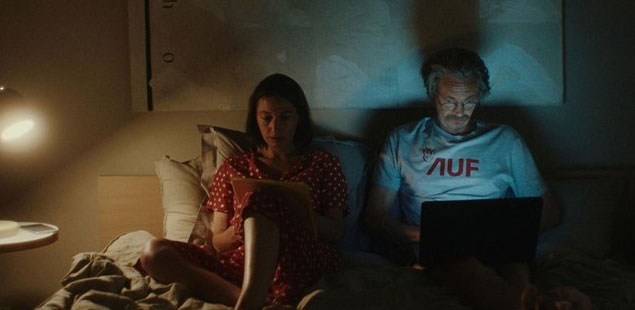
Props to Knag for creating such well-rounded, multidimensional characters, not caricatures. Both Eva and Amir feel like real people you might meet in your own neighborhood. Even the side characters are solid and contribute significantly to the story, especially Eva’s best friend, Ingeborg (Kathrine Thorborg Johansen), and the director of the refugee center, Irene (Ragnhild Gudbrandsen). The film is beautifully shot by Alvilde Horjen Naterstad; the peaceful town contrasts sharply with the characters’ emotional tumult, and the pool scenes offer a refreshing break from the intense sexual tension. The intimate scenes are well-shot in an authentic way, which is common in European cinema; the one involving a sturdy bookcase is particularly memorable.

Olav Øyehaug’s music enhances the emotional roller coaster, with dissonant chords that effectively ramp up the tension. The ending is quite infuriating, as we know Amir’s fate is sealed. I could hear gasps and groans from the audience, and when the camera zooms in on Ingeborg’s face in the final scene, it feels like she embodies our collective reaction to everything that has transpired.
Among the six MSPIFF films I’ve watched so far, Don’t Call Me Mama sticks with me the most. My friend who joined me, along with other festival attendees who have seen this film, shares the same sentiment. It’s an impressive debut from Nina Knag, with such a strong voice and confident direction. I hope she keeps making more films in the future.

 FLIXCHATTER FILM BLOG
Just added it to my watchlist. Thank you very much.