
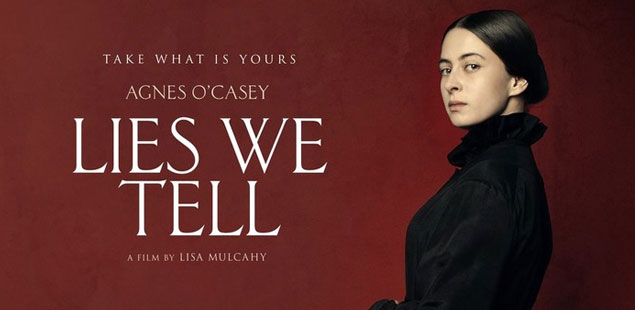
I didn’t catch this one at MSPIFF last year, so I’m really happy to find it streaming on Netflix. Set against the backdrop of Ireland’s wilderness, 18-year-old Maud Ruthyn is grieving the unexpected loss of her affluent father, who left her the inheritance of the sprawling Knowls estate. It’s not exactly a suitable environment for a young woman, particularly an orphaned heiress who’s unschooled in the ways of society.
Directed by Lisa Mulcahy, the story is based on the 1864 novel by Sheridan Le Fanu called Uncle Silas, adapted to the screen by Elisabeth Gooch. The film opens with breathtaking visuals – sweeping shots of untamed landscapes where the sprawling estate stands. Knowl is a daunting, bleak structure where secrets and a dark history hang heavily over the nearby forest, making it an ideal setting for a gothic mystery thriller. Agnes O’Casey is excellent as Maud, who’s naive and innocent in the ways of the world but has a formidable survival instinct that is put to good use when her uncle and his family come to stay at Knowl.
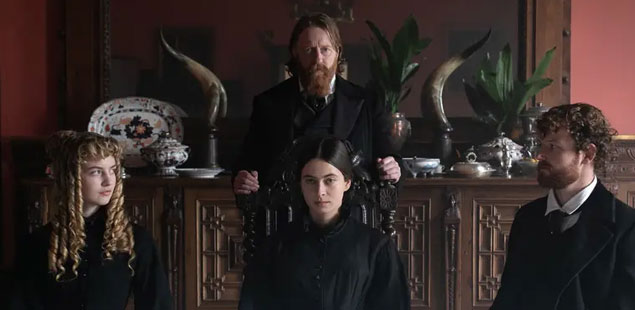
Right from the start, you can tell that Uncle Silas (David Wilmot) spells trouble for Maud. He puts her through some serious, manipulative gaslighting and other sinister moves to seize her inheritance. With his son Edward (Chris Walley), daughter Emily (Holly Sturton), and French governess (Grainne Keenan) all on his side, it looks like Maud’s fate is doomed. DP Eleanor Bowman uses lighting and camera techniques to create a feeling of isolation and claustrophobia in the indoor scenes, making it clear how trapped Maud really is, sometimes even literally. The score by Aza Hand adds a haunting touch that really boosts the atmospheric vibe.
Maud’s situation gets scarier every day, both mentally and physically. Silas is determined to destroy Maud, even going so far as to instruct his good-for-nothing son to commit unspeakable acts against his own cousin. The narrative has a feminist perspective that highlights the limited rights women had in 19th-century Europe, emphasizing how much they depended on the men who had control over them. O’Casey is captivating all the way through; her screen presence as a lead is really powerful. I just found out she was in Small Things Like These and the Netflix limited series Black Doves, but I didn’t recognize her since the roles are so distinct. Wilmot, a character actor from Dublin, does an excellent job as the main antagonist, and the two of them share the most scenes together.
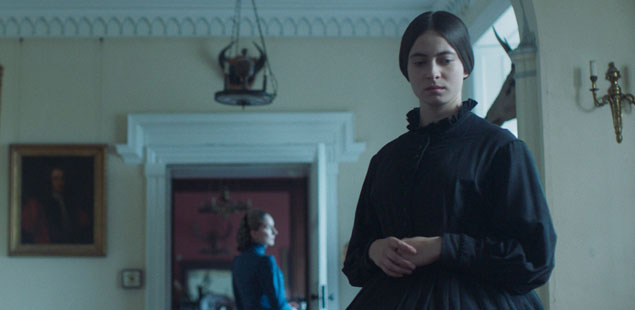
The production quality is top-notch, particularly for an indie film with a small budget. Shot on location at Ardgillan Castle in Balbriggan, which is roughly thirty minutes north of Dublin, the world-building competes with that of larger period drama productions. The cinematography and set design are exceptional, and I love the authentic Victorian-era costumes, especially Maud’s black mourning dress. Her dresses are rich in decorum and modesty, primarily featuring black or darker shades. At times, the film reminds me of Jane Eyre, another Gothic tale with a female protagonist set in the early 19th century.
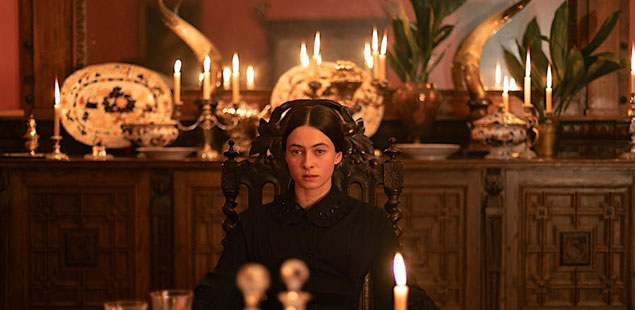
I really admire Mulcahy for her understated, slow-building way of storytelling and for keeping the film to a neat 90 minutes without any unnecessary extras. The plot has its surprises, but it’s the type of story that doesn’t depend on twists to make an impact. Lies We Tell is currently streaming on Netflix. I can’t recommend this enough!

 FLIXCHATTER FILM BLOG
Adding it to my Netflix queue.
Great! I think you’ll like this!
Great reviews as always. I have never heard of the film “Lies We Tell” before but your positive review has given me a reason to check it out. I do love movies that are set in Ireland. It’s a great country that has often made for engaging movies. For instance, the concept for this movie reminds me a lot of the film “The Banshees of Inisherin”. Released in 2023, Martin McDonagh’s film told the story of doomed friendships in Ireland. That film was one of my favourite movies of 2023, and a beautiful portrait of the culture of Ireland. “Lies We Tell” seems to be a similar film in its depiction of Ireland. So, I will definitely be sure to check this one out when it hits streaming. It does appear like the kind of movie that I would appreciate.
Here’s my thoughts on “The Banshees of Inisherin”:
Hey Hassan, I highly recommend this if you have Netflix. It’s a short 90-minute watch but quite satisfying. Yeah, there are lots of great Irish films, and I enjoyed The Banshees of Inisherin as well. The tone, style, and storyline are very different, however, and Lies We Tell is a low-budget indie with a small cast. In any case, it’s well worth checking out, I actually rate this one higher than the Martin McDonagh’s movie.
Thanks for the feedback. Unfortunately, I just checked and discovered that the film isn’t available on Netflix in Pakistan. I guess that streaming movies differs for Netflix across the various regions. That being said, I will definitely try and see it when it hits online streaming websites. I do appreciate Irish films so I have a feeling I would definitely enjoy this one. It seems like the kind of movie I would love.
Pingback: The Minnesota Movie Digest: Issue No. 175 – Minnesota Film Critics Association
Thank you, Ruth!
I’VE GOT TO SEE THIS!!!! You made it sound superb.
❦🕊 ~ ❤︎🌟❤︎ ~ 🕊❦
Oh you will LOVE this one. The story, acting are amazing, but the production design and costumes are superb!! It’s on Netflix so you definitely can and should watch it soon.
Norm and I are watching it tomorrow night! xoxoxoxoxo
Woo hoo!! I think you’ll appreciate it, though there is a scene that is very difficult to watch… you’ll know which one I mean.
Okay.. it’s up as soon as we finish Mall Apartment.
Knowing N, he’ll want to watch Lies first… then finish Mall Apt.
Whatever!
Pingback: FlixChatter’s FEBRUARY 2026 Viewing Recap, Mini Reviews of My Mother’s Wedding + She Said Maybe, and Movie of the Month – FLIXCHATTER FILM BLOG